
Foreign Exchange Tips for Travelers: How to Keep More Money in Your Pocket Across APAC
Advertisement
Smart foreign exchange tips for APAC travelers. Learn how to avoid hidden fees, get better rates, and stretch every dollar further abroad.
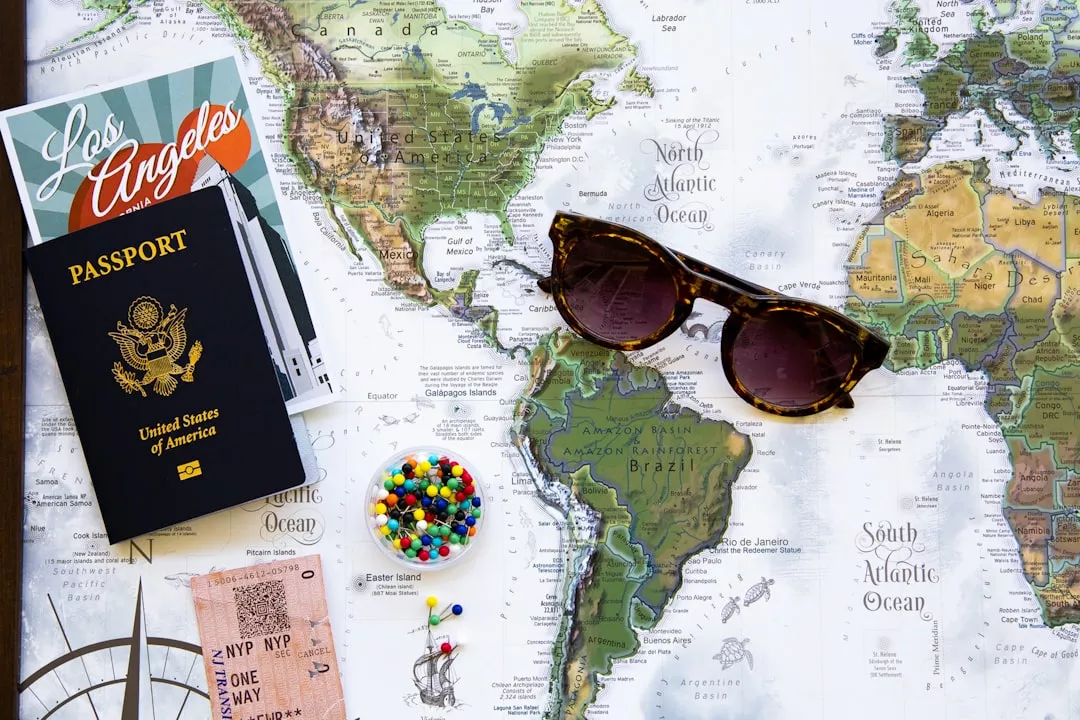
I've lost count of how many times I've watched fellow travelers get stung at the airport currency counter — handing over a stack of local currency and walking away with far less than they expected. Foreign exchange is one of those areas where a little knowledge genuinely translates into real money saved, and across APAC, where so many of us cross borders regularly for work, family, or holidays, it matters more than most people realise.
Whether you're flying from Sydney to Bali, hopping from Singapore to Bangkok, or heading from Manila to Tokyo, the way you manage your currency can either quietly drain your travel budget or quietly pad it. Here's what I've learned — and what I'd tell a friend planning their next trip.
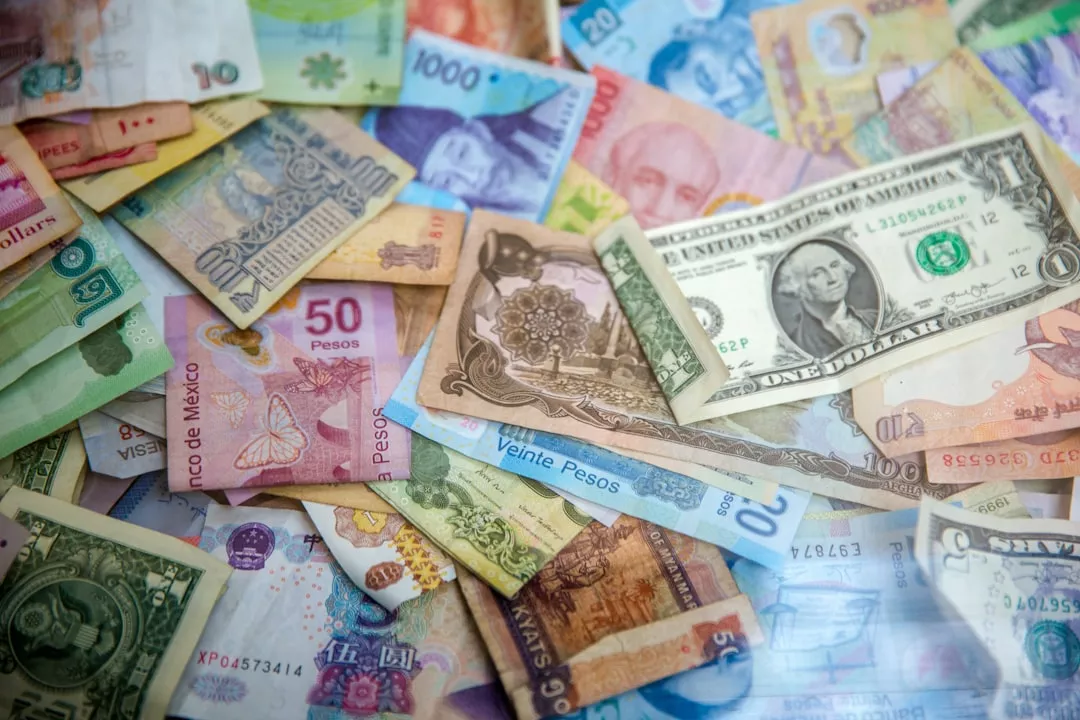
Why Exchange Rates Are Never Quite What They Seem
The rate you see quoted on financial news or on currency conversion sites is called the mid-market rate — essentially the midpoint between what buyers and sellers pay. No retail exchanger gives you this rate. Everyone — banks, airport counters, hotel desks, even your credit card — builds in a margin on top of it. The question is just how large that margin is.
At airport exchange counters, especially in arrival halls, that margin can be significant. I've seen spreads that effectively cost travelers several percentage points on every transaction — amounts that add up fast when you're converting AUD, SGD, PHP, MYR, or THB in meaningful quantities. The general rule: the more convenient the location, the worse the rate tends to be.
The Hidden Cost Nobody Talks About
Beyond the spread, watch for flat fees or minimum charges per transaction. A flat service fee on a small conversion can represent a surprisingly large percentage of what you're exchanging. Always ask the total amount you'll receive — not just the quoted rate — before handing anything over.
Some providers advertise "zero commission" but bake their profit entirely into a poor rate. Others charge an explicit fee but offer a tighter rate. Doing the math on what you actually receive is the only way to compare honestly.
Where to Actually Exchange Currency in APAC
Across markets like Australia, Malaysia, and the Philippines, the landscape of exchange options varies quite a bit. Here's how the main options generally stack up.
Licensed Money Changers
In many APAC cities — particularly in Singapore, Kuala Lumpur, and Manila — licensed independent money changers operating in shopping districts or dedicated currency centres often offer rates that are noticeably better than banks or airport counters. They have lower overheads, higher transaction volumes, and compete aggressively with each other. This is frequently where experienced travelers go first.
The catch: you need to know they're legitimate. Always use government-licensed operators. In most APAC markets, financial regulators maintain public registers of licensed money changers — it's worth a quick check before you hand over cash. In Singapore, for example, the Monetary Authority of Singapore regulates money-changing and remittance businesses and publishes a public register of licensed operators. In Malaysia, Bank Negara Malaysia oversees payment and money-changing services and maintains similar licensing information.
Banks and ATMs
Withdrawing local currency from ATMs at your destination is often one of the more practical approaches, especially for smaller amounts. Your home bank's international ATM fee and the receiving ATM's fee both apply, but when spread across a reasonable withdrawal amount, the total cost can compare favorably to exchange counters.
That said, always choose to be charged in the local currency of the country you're in — not your home currency. This is called Dynamic Currency Conversion (DCC), and when the ATM or card terminal asks if you'd like to pay in your home currency, saying yes almost always means accepting a poor rate set by the terminal operator rather than your own bank. Always decline DCC.
Your Credit or Debit Card
Using a card abroad is often convenient, but the foreign transaction fee — sometimes called a currency conversion fee — charged by many issuers varies by card and issuer; check the current fee on your card issuer's official website before travelling. Over a two-week trip with daily spending, that adds up.
Some cards, particularly travel-focused ones, waive this fee entirely. If you travel frequently, this is one of the most valuable card features to look for. I've written more about this in our guide to travel credit cards across APAC — worth a read before your next trip.
Even if your card charges a foreign transaction fee, it can still be the right tool for large purchases like hotels or tours, where carrying cash isn't practical. The key is knowing your card's fee structure in advance, not discovering it on your statement when you get home.
Timing Your Exchange: Does It Actually Matter?
Exchange rates fluctuate constantly based on economic data, interest rate expectations, political events, and market sentiment. For most leisure travelers, trying to perfectly time currency exchanges is neither practical nor particularly rewarding — the short-term moves that affect a typical travel budget are usually modest.
What does matter more than timing the market is avoiding forced exchanges in bad locations. Exchanging at the airport because you left it too late, or accepting a hotel's in-house rate out of convenience, typically costs more than any rate fluctuation you might have caught by waiting.
A Practical Approach to Timing
I find the most useful approach is to watch rates loosely in the weeks before a trip — not to trade, but to get a feel for what a reasonable rate looks like. That way, when you do exchange, you can tell at a glance whether the rate offered is in a normal range or whether something looks off.
If you're making a larger conversion — say, for a longer trip or a significant purchase abroad — splitting the amount across two or three exchanges over a few weeks can help smooth out short-term volatility, rather than committing everything to one rate on one day.

Multi-Currency and Travel Cards: Are They Worth It?
A growing number of APAC travelers use prepaid multi-currency cards or digital travel wallets that let you load several currencies and spend in each without conversion fees. In markets like Australia, Singapore, and New Zealand, these products have become quite popular and genuinely useful for frequent short-haul travelers.
The appeal is clear: you load your chosen currencies when rates look reasonable, lock them in, and then spend without worrying about daily rate fluctuations or foreign transaction fees. Many of these products also make it easy to convert between currencies in the app.
The limitations are real too. Exchange rates on these platforms still include a margin, even if fees are low. Some charge inactivity fees. And if a currency you've loaded strengthens significantly after you load it, you might feel you've locked in at a poor time — though of course rates can go the other way too.
For travelers who make multiple international trips a year, particularly across APAC's diverse currency landscape (AUD, SGD, PHP, MYR, NZD, IDR, THB, VND), multi-currency tools genuinely earn their place. For a single annual trip, a no-foreign-transaction-fee credit card combined with careful ATM use may be simpler and just as effective.
Cash vs Card: Finding the Right Balance
This is genuinely market-dependent across APAC. In places like Japan and many parts of Vietnam and Indonesia, cash remains very much the norm for everyday transactions — markets, street food, smaller guesthouses, and local transport often don't accept cards at all. Arriving without local currency is a practical problem, not just an inconvenience.
In contrast, markets like Singapore, Australia, and Malaysia have seen card and contactless payment adoption become widespread in recent years — you can go days without needing physical cash in many urban areas. If you want to understand just how far digital payments have come across the region, our piece on contactless payments reshaping everyday finance in APAC gives good context.
My personal approach is to arrive at any new destination with a modest amount of local currency already sorted — enough to cover transport from the airport and the first day — then reassess once I've seen how cash-dependent the area actually is. Exchanging a small amount at the airport is often worth it for that peace of mind, even if the rate isn't perfect, as long as you're not converting your entire budget there.
Safety and Carrying Cash Abroad
Carrying large amounts of foreign cash comes with obvious risks. Splitting your money between a travel wallet and a backup kept separately in your luggage is basic but genuinely useful practice. Having a card as a backup — even one with modest foreign fees — means a lost wallet doesn't ruin your trip.
It's also worth understanding what your card's emergency cash advance options are before you travel, and saving your issuer's international helpline number somewhere that isn't just your phone, in case your phone is also lost or stolen.
Understanding Fees Before You Go: A Quick Checklist
Before any international trip, I'd suggest spending fifteen minutes on these specific questions about any card or account you plan to use abroad:
- What is the foreign transaction fee percentage, if any? (Check the current figure on your card issuer's official website.)
- What is the international ATM withdrawal fee — both flat fee and percentage? (Confirm current fees directly with your bank or card issuer.)
- Does the card have a good rate for foreign currency spending, or does it add a currency conversion margin on top of the network rate?
- What is the daily ATM withdrawal limit when overseas?
- Does the card offer any purchase protection or travel insurance benefits that might be relevant?
These answers are in the card's fee schedule and product disclosure — the same document that feels tedious to read but contains exactly the information that determines how much your trip actually costs. Our guide to reading credit card terms across APAC markets can help you navigate that fine print more efficiently.
A Few Habits That Make a Real Difference
After years of traveling across APAC for both work and leisure, a few habits have saved me more money than any single clever trick:
Never exchange at hotel desks. The convenience premium is real and rarely justified. The same applies to cruise ship exchanges and resort currency desks.
Compare a few options in the first day. Once you've arrived, take ten minutes to check what rates look like at a local bank, a licensed money changer, and your ATM. That context helps for every subsequent decision during the trip.
Keep your receipts. Exchange receipts sometimes include the official rate used, which can help you spot if you were given a different rate to what was advertised, and they're useful if any dispute arises.
Reconvert thoughtfully. If you have leftover local currency at the end of a trip, converting it back involves paying the spread again. A small amount may not be worth converting — setting it aside for a future visit, or donating coins to airport charity boxes, can make more sense than paying fees to reconvert a modest sum.
The Bigger Picture
Foreign exchange is one of those costs that most travelers underestimate simply because it's invisible — it never appears as a line item on a bill, it just quietly erodes how much you receive or how far your spending goes. Once you start paying attention to it, the accumulated savings across even a few trips are meaningful.
The good news is that across APAC, the options for getting reasonable rates are genuinely better than they were a decade ago. Competition between digital platforms, licensed money changers, and card issuers has compressed margins in many markets. The tools are there — the main thing is knowing which one to reach for and when.
If you're also thinking about how your card's rewards stack up when you're overseas, it's worth checking whether your card earns points on foreign currency transactions — some do, some don't, and the rules can be surprisingly specific. Our guide on understanding credit card rewards programs breaks down how to make sure you're not leaving value on the table.
Travel is too good to let avoidable fees chip away at it. A bit of preparation goes a long way.

James Mitchell
Financial journalist covering Australian and New Zealand banking.








